By Barrister Rafique Ahmed
24 November 2026
The history of the Awami League in Bangladesh raises a fundamental question: can an organisation that repeatedly uses political power, state institutions and violence to suppress its opponents, intimidate the population, deprive citizens of democratic rights and facilitate large-scale corruption continue to enjoy the unquestioned status of a legitimate political party?
In my view, the Awami League’s record, particularly between 1973 and 1975 and again from 2009 to 2024, demands serious examination. Its political history cannot be judged merely by its contribution to the independence of Bangladesh. No political party, regardless of its historical achievements, should be above accountability.
1973–1975: The beginning of authoritarianism
Following independence, the Awami League came to power with enormous public support. However, the promise of democracy soon gave way to authoritarianism.
The 1973 general election was marked by serious allegations of electoral irregularities. Political opposition faced intimidation, and the country experienced widespread political violence.
The most significant assault on democracy came in January 1975, when the Fourth Constitutional Amendment established a presidential system and paved the way for BAKSAL, a one-party political system. Other political parties were excluded from the political process, while press freedom was severely restricted.
The establishment of one-party rule represented a fundamental betrayal of the democratic aspirations for which the people of Bangladesh had fought.
1996–2001: Political violence and the culture of impunity
When the Awami League returned to power in 1996, expectations were high that democratic institutions would be strengthened. However, political violence, intimidation, allegations of extortion and the abuse of political influence continued to damage the country’s democratic environment.
The activities of politically affiliated student and youth organisations became a serious concern. Political clashes, attacks on opponents, intimidation and the alleged use of criminal networks weakened public confidence in law enforcement and the administration of justice.
The problem was not simply competition between political parties. It was the growing culture of impunity in which political connections could provide protection against accountability.
2009–2024: Fifteen years of authoritarian rule
The period from 2009 to 2024 represents one of the darkest chapters in Bangladesh’s political history.
Under Sheikh Hasina’s leadership, democratic institutions became increasingly weakened. Elections were repeatedly criticised for lacking genuine competition and public credibility. The 2014, 2018 and 2024 elections generated serious questions about the legitimacy of the electoral process.
Opposition leaders, activists, journalists and ordinary citizens faced arbitrary arrests, politically motivated prosecutions, intimidation and restrictions on freedom of expression.
Enforced disappearances became a deeply disturbing feature of the political environment. Numerous families spent years searching for relatives who had disappeared after being picked up by individuals allegedly connected to state security agencies.
Torture, unlawful detention and extrajudicial killings were repeatedly reported by human rights organisations. The judiciary and law enforcement institutions also faced serious allegations of political interference and selective application of the law.
A justice system should protect citizens, not become an instrument for eliminating political opposition. Allegations that legal proceedings, judicial processes and state institutions were manipulated to punish opponents deserve independent investigation.
The economic plunder of Bangladesh
Another major question concerns the alleged systematic looting of public wealth.
The economic consequences of corruption, financial irregularities, politically connected business arrangements and money laundering during the Awami League’s 2009–2024 tenure require comprehensive investigation.
A government-commissioned White Paper on the state of Bangladesh’s economy estimated that approximately US$234 billion was siphoned out of the country during the Awami League governments’ period between 2009 and 2023.
This extraordinary figure represents an estimated average of approximately US$16 billion annually.
If established through proper investigation, such financial outflows would represent an enormous betrayal of the people. Money that should have been invested in hospitals, schools, infrastructure, employment and public services was allegedly transferred abroad through corrupt financial networks.
Those responsible must face investigation, asset recovery and prosecution in accordance with the law.
July–August 2024: The final bloody chapter
The events immediately preceding Sheikh Hasina’s departure from Bangladesh on 5 August 2024 exposed the extent of the crisis.
Students initially took to the streets over the public-sector quota system. What followed was a nationwide confrontation involving security forces and violent political elements.
Thousands of people were injured, and an extraordinary number lost their lives.
The United Nations Human Rights Office subsequently published its independent fact-finding report on 12 February 2025. It estimated that as many as 1,400 people may have been killed between 1 July and 15 August 2024.
The report identified reasonable grounds to believe that the former government, security and intelligence services, and violent elements associated with the Awami League were systematically involved in serious human rights violations.
These included extrajudicial killings, arbitrary arrests, torture and other forms of ill-treatment.
The scale of the killings during this period demands accountability at every level, including those who ordered, facilitated, participated in or concealed the crimes.
Sheikh Hasina’s departure to India on 5 August 2024 brought an end to her government’s fifteen-year period in power. However, her departure did not bring an end to the suffering of the victims and their families.
Exporting political intimidation: From Bangladesh to America and Europe
Perhaps one of the most disturbing developments is that political intimidation associated with Awami League activists has not stopped at Bangladesh’s borders. Incidents involving Bangladeshi political figures overseas raise serious questions about the safety of democratic political participation in foreign countries.
Harassment of Dr Muhammad Yunus in America
On 13 October 2026, Dr Muhammad Yunus, former Chief Adviser of the interim government and Nobel Peace Prize laureate, was reportedly confronted and harassed by Awami League leaders and supporters at John F Kennedy International Airport in New York.
According to media reports, he was travelling in a wheelchair when a group of Awami League activists surrounded him, shouted accusations and continued their confrontation as he was moved back into the airport terminal.
This was particularly disgraceful because Dr Yunus was an internationally recognised public figure and a former head of government. Political disagreement cannot justify intimidating or humiliating another person in a public place.
Harassment of the Law Adviser in Switzerland
The harassment of former Law Adviser Dr Asif Nazrul at Geneva Airport in November 2024 was another disturbing example.
While returning from an official visit to Switzerland, Dr Asif Nazrul was reportedly surrounded and harassed by a group of people. The incident was serious enough to result in disciplinary action against officials at the Bangladesh diplomatic mission who failed to provide appropriate assistance.
These incidents demonstrate why political intimidation overseas must be taken seriously.
Attack on Nahid Islam and Bangladeshis in London
The most alarming recent incident occurred on 16 November 2026 in east London, during a civic reception organised for Nahid Islam, the National Citizen Party (NCP) convener and opposition chief whip.
According to reports published by The Daily Star on 17 November, suspected Awami League supporters attacked people attending the reception outside the Mayfair Venue on Romford High Road.
The incident reportedly involved wooden sticks, tree branches and bottles. Several people were injured, with some requiring hospital treatment.
What makes this incident particularly disturbing is that the violence was directed at people attending a political and civic gathering in the United Kingdom, a country whose democratic traditions are founded on freedom of expression, peaceful assembly and political disagreement.
Nahid Islam called on the British authorities to investigate the incident and prosecute those responsible.
An individual must be free to organise a political meeting, express an opinion and attend a public gathering without fearing physical assault.
The United Kingdom must not become a safe haven for individuals who seek to intimidate political opponents through violence.
British politicians and the international response
The London incident has attracted considerable attention from British politicians, national newspapers and the wider political community.
The attack generated reactions involving Nigel Farage, senior Conservative politicians and Reform UK MPs. It also received coverage in several major British newspapers, including The Telegraph, The Times, the Daily Mail and the Evening Standard.
The fact that violence at a Bangladeshi political gathering has become an issue in British political debate should be a serious warning.
Britain has a substantial Bangladeshi community. British citizens of Bangladeshi origin have the same rights to participate in political activities, organise meetings and express their views as every other citizen.
They should not be subjected to imported political violence.
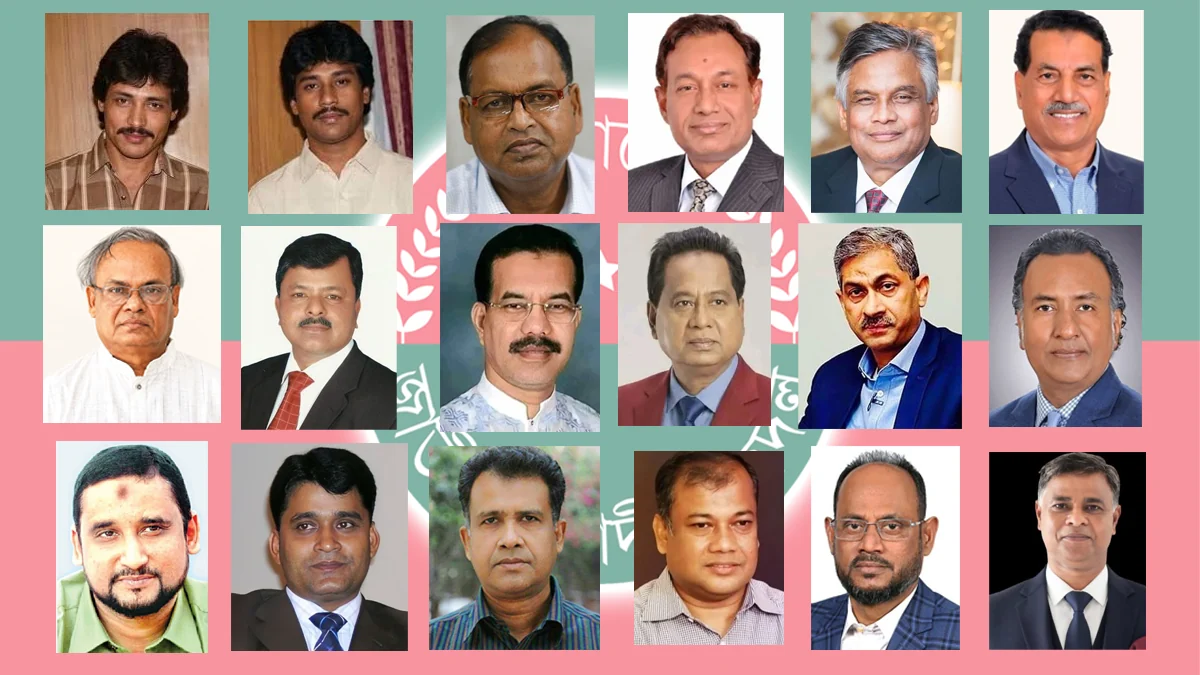
On 18 November 2026, fourteen former advisers of the interim government issued a statement condemning the London attack and violence in Bangladesh. They called on British authorities to investigate the incident and consider the application of relevant British law, including counterterrorism legislation where the evidence justifies it.
They described the London incident as part of a wider pattern of violence and destabilisation.
This is no longer merely a matter of disagreement between Bangladeshi political parties. It concerns public safety, the rule of law and the protection of democratic freedoms in the United Kingdom.
Gopalganj: A district held hostage by political violence
The situation in Gopalganj, the home district of Sheikh Hasina, provides another disturbing example of the violence associated with Awami League activists.
In July 2025, serious violence erupted in Gopalganj during the National Citizen Party’s programme. The clashes resulted in deaths and injuries, while government buildings and public property were attacked.
Reports documented attacks on the deputy commissioner’s office, the superintendent of police’s office, the district jail and other public facilities. The rally venue was set on fire, and public property was vandalised.
The violence has not stopped there.
In November 2026, further reports described armed processions, attacks on police property, arson, vandalism and the destruction of public facilities in Gopalganj.
Reports also documented attacks on police stations, including the burning of Muksudpur Police Station, and the destruction of vehicles. Grameen Bank branches and political offices have also been targeted in the wider wave of violence.
On 18 November 2026, The Daily Star reported attacks on a BNP party office, a lawmaker’s clinic and a Grameen Bank branch in Gopalganj.
A district cannot be allowed to become a political battlefield simply because it is associated with a particular political leader.
The people of Gopalganj are citizens of Bangladesh. They deserve protection, security and the same rights as people in every other district.
The burning of police stations, attacks on government assets, destruction of banks, assaults on civilians and killings cannot be justified as political demonstrations.
If these incidents are established through proper investigation, those responsible must face the full force of the law.
Can such an organisation still be called a political party?
A political party should exist to represent citizens, protect democratic values, uphold the Constitution and participate in peaceful competition for public support.
An organisation whose leadership or affiliated elements are credibly implicated in systematic violence, political repression, enforced disappearances, torture, extrajudicial killings and large-scale corruption cannot simply dismiss these allegations by referring to its historical contribution to national independence.
The independence of Bangladesh belongs to its people. It does not belong exclusively to any political party or family.
The Awami League must answer for its record. Its leaders must explain the killings, disappearances, torture, electoral manipulation, institutional corruption, financial devastation and continuing allegations of political violence.
Accountability before political rehabilitation
Bangladesh cannot build a democratic future by forgetting its past. Nor can it establish the rule of law through revenge or collective punishment.
Every individual suspected of committing a crime must receive a fair trial, with the right to legal representation and due process. Political affiliation must neither protect a criminal nor make an innocent person a criminal.
If the Awami League wishes to return to legitimate democratic politics, it must first confront its history, acknowledge the suffering of victims, cooperate with independent investigations and demonstrate a genuine commitment to democratic principles.
Its historical contribution to the Liberation War cannot serve as permanent immunity from accountability.
The British government must also ensure that its territory is not used to organise political violence, intimidate opponents or threaten the safety of members of the Bangladeshi community.
My position is clear: an organisation that practises terrorism, political repression and systematic violence cannot claim democratic legitimacy merely because it calls itself a political party. The Awami League’s record must be judged by its actions, not by its name or historical reputation.
Bangladesh needs democracy, justice, accountability and the rule of law — not another political organisation exercising power through fear.